


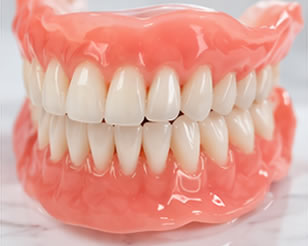
Like many things in life, the importance of something is never truly appreciated until it is gone. If you’ve lost your teeth, whether due to injury, tooth decay or gum disease, you surely understand. The good news is that you have options to replace them. Dentures can help restore your way of life by helping you with day-to-day functions, such as eating and speaking, as well as help restore your confidence by improving your appearance and smile.
Making a denture is a process that usually takes about 6-12 weeks, however this can vary from one patient to another.
It also depends on the type of the denture and the technique the dentist or the laboratory technician uses to make the denture.
Transcript
Denture Treatment Process
Complete dentures are made using your mouth as a model. First, the dentist will take an accurate impression of the upper and lower arches of your mouth. This impression is then sent to the dental laboratory.
At the next visit, the dentist will record the relationship of the arches that best resembles your original bite and helps you select the shape and color of the denture teeth and gums. Keep in mind the color of everyone’s gums varies. To make a more natural denture the dentist will help you choose the shade that best matches your mouth.
In the subsequent visits the dentist will adjust your bite, test your speech and check the appearance and functionality of the denture teeth and gums. After a satisfactory fit and appearance is achieved, the denture is then sent back to the laboratory for fabrication.
Denture Complications
While every effort is made to make a good and functional denture, please keep in mind that there is no such thing as a perfect denture. After delivery of the denture, it may require a few adjustment visits and some time for you and your new denture to adapt to each other. The most important point to remember is that adjusting to your new dentures is a process; it sometimes takes a little time to get used to.
A new denture can also alter your eating and speaking habits and it may require a bit of practicing before you get comfortable.
Finally, due to differences in the shapes of the jaws and the strong muscle movement of the tongue and cheek, a lower denture may be harder to keep in the mouth compared to an upper denture.
Different Denture Options
There are new advances in making dentures. One such advance is an implant-supported denture that stabilizes the denture. This kind of denture requires the placement of implants in your mouth before making the denture.
Immediate Denture
Transcript
If you’ve suffered severe tooth decay, injury, or gum disease and need your remaining teeth replaced, an immediate denture can help relieve you of some concerns you may have after the extraction process is complete. An immediate denture, as its name implies, is a denture that is placed in your mouth immediately after your teeth are removed. It makes the transition to dentures less noticeable and also helps keep you performing everyday functions, like chewing and speaking.
Immediate Denture Treatment
Immediate dentures are made using your mouth as a model. First, the dentist will take an accurate impression of the upper and lower arches of your mouth and establish a bite that best resembles your original bite. The dentist will also help you select the shape and color of the denture teeth and gums. This impression is then sent to the dental laboratory.
During the next visit the dentist will adjust your bite, test your speech and check the appearance and functionality of the denture teeth and gums. Sometimes it is necessary to repeat this step to ensure that everything is just right.
After a satisfactory fit and appearance are achieved, the denture is then sent back to the laboratory for fabrication. At the subsequent visit, the remaining teeth will be removed and the denture will be delivered. Please note that the extractions may be performed at one visit or they may be removed in two or more visits depending on the number and condition of the teeth to be extracted, the shape of your jaws and your health condition. The dentist will best advise you of the preferred timing for your extractions.
Immediate Denture Complications
While every effort is made to make a good and functional denture, please keep in mind that there is no such a thing as a perfect denture. After delivery of the immediate denture, it may require a few adjustment visits and some time for you and your immediate denture to adapt to each other. This is due to the fact that when your gums heal following the extractions they will shrink for a period of about 6 months and the denture needs to be re-based or re-lined to fit properly.
The most important point to remember is that adjusting to your immediate dentures is a process; in some cases, it takes weeks or months to get used to your immediate denture.
An immediate denture can also alter your eating; you will not have the same chewing efficiency as you had with your natural teeth. An immediate denture will also alter your speaking and it may require a bit of practicing before you get comfortable. Keep in mind that due to differences in the shapes of the jaws and the strong muscle movements of the tongue and cheek, a lower denture may be harder to keep in the mouth compared to an upper denture.
Fortunately there are new alternatives now, such as implants, which can help restore functionality that is more like natural teeth. You can discuss this possibility with the dentist.
Partial Denture
Partial dentures are replacement teeth for people who have lost one or more of their teeth. Partial dentures can be taken in and out of the mouth and consist of a denture base, which closely resembles the color of your gums and denture teeth, which are attached to a supporting framework. The partial denture then attaches to the existing teeth via a clasp or some other retentive device.
Partial dentures are made using a model of your mouth.
Making a partial denture requires about 6-8 weeks, however this can vary from one patient to another. It also could depend on the type of denture and the technique your dentist or the laboratory technician uses.
Partial Denture Treatment
The first step in making a partial denture is the preparation of the teeth. During this phase your dentist may prepare the teeth that the partial denture will use for support. Next, your dentist will take an accurate impression of the upper and lower arches of your mouth and records your bite. The impressions are then sent to the dental laboratory.
At the subsequent visits your dentist will evaluate your bite, test your speech and check the appearance and function of the partial denture teeth and gums.
After the final satisfactory fit and appearance are achieved, the denture is then sent back to the laboratory for final fabrication.
Partial Denture Complication
While every effort is made to make a good and functional partial denture, it may require a few adjustment visits and a little time for you and your partial denture to adapt to each other. The most important point to remember is that adjusting to your partial denture is a process; in some cases, it takes weeks to get used to a partial denture.
A new partial denture can also alter your eating and speaking habits and it may require a bit of practicing before you get comfortable.
Different Types Of Partial Dentures
There are newly developed techniques in making partial dentures. One such advance is an implant-supporting partial denture that helps give additional support to the partial denture. While it offers additional support it also requires the placement of implants in your mouth before making the denture.
There is also a partial denture that uses a special material called valplast which is more aesthetically pleasing to the eye. This kind of partial does not use metal as its base and has hooks that are made with a flexible plastic material.
Stayplate (Temporary Denture)
If you are scheduled to have a tooth pulled before getting your partial denture, then your dentist may advise you to get a temporary partial denture or a stayplate while your gums and their supporting bone are healing. A stayplate will replace the missing tooth or teeth and can help you with your chewing and speaking until a more permanent solution is achieved. A stayplate will also help maintain your appearance when in public and keep your existing teeth from shifting in your mouth and creating bigger problems.
The Stayplate Treatment
Transcript
Stayplates are made using your mouth as a model. First, your dentist will take an accurate impression of the upper and lower arches of your mouth and establish a bite that best resembles your original bite. Your dentist will also help you select the shape and color of the stayplate teeth and gums. This impression is then sent to the dental laboratory.
At the subsequent visit, the teeth will be removed and the stayplate will be delivered.
What You Should Know
Please keep in mind that there is no such a thing as a perfect stayplate. After delivery, it may require a few adjustment visits and some time for you and your stayplate to adapt to each other.
Stayplates can also alter your eating; you will not have the same chewing efficiency as you had with your natural teeth. Stayplate will also alter your speaking and it may require a bit of practicing before you get comfortable.
The most important point to remember is that adjusting to your stayplate is a process and stayplate is a temporary replacement until another form of treatment such as an implant, bridge or a partial denture can be made.


